
Healing Deep Wounds
A review of the short film The Aloha Within, directed by Robert Massetti and Elvis Maleko
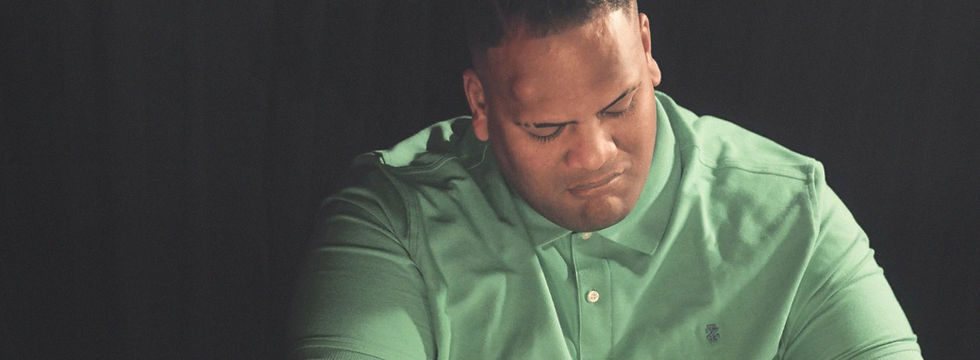
The Aloha Within opens with a lovely song. A warm voice sings an unfamiliar melody without accompaniment, and that voice, against the black background of the image, draws the viewer in from the very first moment. When the first image appears, we may assume the voice belongs to a singer at a wedding ceremony, with dancers performing on stage for the guests. Yet even in those early minutes it is not entirely clear where we are or who these people are. The ambiguities the filmmakers place before us—among them the identity of the characters, who Chris is, what connection Marc has with Uncle Ronnie, and so on—keep us guessing. We form hypotheses, particularly the sense that what troubles Marc is the memory of his beloved, the woman in the photograph, who likely died in an accident, since the sound of a car crash is heard as he looks at her picture. These deliberate ambiguities at the beginning of the film successfully awaken our curiosity about the subject and the identities of the characters. In this first step, the directors succeed completely.

The film, which unfolds entirely in enclosed spaces, skillfully works its way toward Marc’s secret and the reason for his distress. Gradually we learn that an event has occurred that has transformed his life—an event involving a loved one, a woman who is gone and has left Marc alone and depressed. Aliana, whose face we glimpse for a moment in a flashback, takes shape through the conversations among the characters. The filmmakers construct her presence through her absence, through the effect she has on the lives of others and especially on Marc, through the devastating impact of her loss. This is one of the strengths of the screenplay: it brings Aliana into being through recollection, through references to her outstanding moral qualities, and through no more than one or two fleeting flashbacks of her face. The screenplay can be praised on this account because it employs every character only to the extent the text requires—neither more nor less. Every figure we see, from the singer at the opening, to the child who comes looking for a lost object, to Uncle Ronnie, and of course Marc himself, performs exactly as much as is needed to serve the film’s purpose.

The film advances along its chosen path with care and deliberation. It is midway through the story that Marc confesses he stands on the edge of a dangerous precipice, that he feels worthless, and that this feeling has completely overtaken him. Because this confession comes roughly in the middle of the film, by that point we have already become acquainted with some of the people around Marc. The filmmakers deliberately introduce these characters before revealing the cause of Marc’s pain, thereby preparing the ground for the final conversation. That conversation, which is not unlike a monologue, allows Marc’s friend to offer words that are deeply human yet outwardly simple, and in doing so helps his friend find a measure of healing. The introduction of these characters—including the warm, friendly relationship Uncle Ronnie shares with the others—gives all of those exchanges their full meaning. In effect, before the dialogue arrives, the filmmakers have already shown us evidence of the truth of what will be said. Thus, before Chris speaks a word, we have already seen the foundation that supports those words.

The most important strength of the film is the performance of the actor who plays Chris. His presence and the things he says, while Marc remains silent, become the entire driving force of the story. It is he who, by speaking of the unbearable sufferings of life, of time that miraculously heals many of a person’s wounds, and of those who love and worry about Marc, breaks the heavy atmosphere of that room and prepares us to hear about Aloha. It is he who speaks of the deep meaning of the word, of the combination of “presence” and “the breath of life” that together form Aloha and create the beautiful sense of “being present with one another and sharing the breath of life.” In truth, Chris’s words are what lead us toward the film’s source of light—its roots. Those roots are what ultimately heal, or at least soothe, human suffering and pain. Chris’s tone, the path of his remarks that begins with the pain of loss and arrives at the true meaning of the root of Aloha, and of course the timbre of his voice, the smile on his lips, the tear that falls from his eye, and all the other details visible in his speech and manner—all of these help us accept the comfort he offers, and that is why we believe in Marc’s healing. It is the credibility of this sequence that allows us to accept the overall meaning of the film as well.
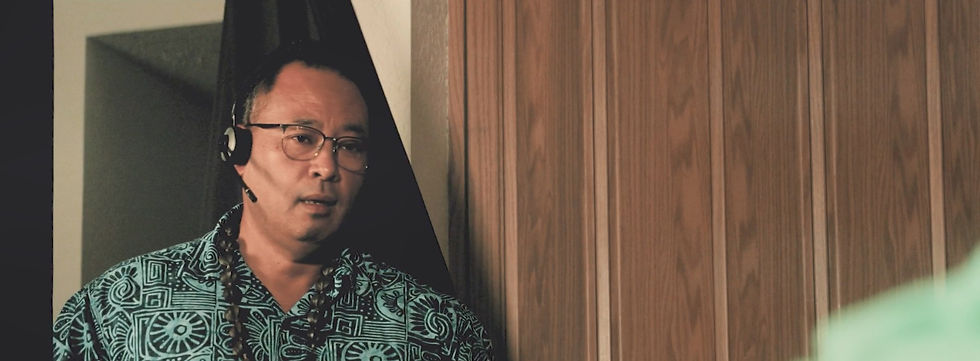
Although the film is made entirely in enclosed spaces, during the ceremonial sequence it briefly steps outside. That striking movement back and forth keeps the central theme from slipping from our minds and establishes a logical connection between the lovely song we heard at the beginning and what we understand from Chris’s words. Robert Massetti and Elvis Maleko clearly understand that the only way to bring us close to a character who is experiencing immense pain is through the other people in his life. They know that a direct approach to characterization rarely works, and that the best way to portray a complex figure—or one trapped in turmoil, loneliness, and suffering—is always through other characters who occupy more ordinary, psychologically accessible positions. It is through these ordinary characters that the viewer draws near to the central figure. The most effective way to understand a person enduring a spiritual crisis is to turn to those around him.
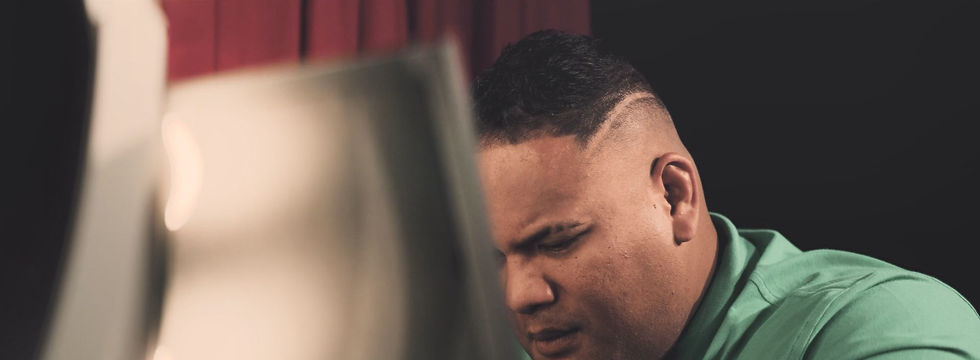
The film succeeds in forging a deep and powerful connection between past and present by invoking roots and Polynesian traditions, reminding the viewer that these roots do not exist merely for ceremonies and ritual dances; they exist to play an important role in our contemporary lives. These roots are there to help us in hard and critical times, in difficult emotional situations, in the destructive storms of the mind, and to assist us in emerging from those desperate states. These traditions exist, even in the form of a single word, to remind us that we can draw on their depth, wisdom, and meaning in order to live better, to pass through suffering, to be healed. This aspect of the film, without any intention of preaching, functions extraordinarily well. In the brief time at its disposal, the short film The Aloha Within is able to create a deeply intimate atmosphere, to invent likable characters, to share a believable pain with us, and to propose a credible path toward healing deep wounds. In this respect, too, the film is a notable example: it avoids visual clutter, constant movement, and rapid cutting, and instead strives to realize its screenplay with simplicity and delicacy. That simplicity, like every other element of the work, serves the meaning and the screenplay. By refraining from visual excess, the filmmakers invite us to concentrate on the essential statement of the piece.


Comments